

Technion and Cornell University honored the 2017 graduates of the Joan & Irwin Jacobs Technion-Cornell Institute at Cornell Tech – including the first-ever graduating class of Health Tech students and the second graduating class of Connective Media students. This will be the last class graduating from Cornell Tech’s temporary home in the Google building in Chelsea as the new Cornell Tech campus home of the Jacobs Technion-Cornell Institute opens on Roosevelt Island in September.
Asides

Guangdong Technion
Guangdong Technion
A year after the cornerstone ceremony of the Guangdong Technion Israel Institute of Technology, the fledgling multinational institute in China received official approval from the Chinese Ministry of Education. Cooperation with Technion is consistent with the goal of the Chinese Government to establish world-class research universities and to promote innovation-based development, confirmed the ministry. The new campus opens in the coming academic year..

The Receptive Mind
The Receptive Mind
“In recent decades, the field of brain research has become diverse and multidisciplinary,” explains Prof. Jackie Schiller of the Rappaport Faculty of Medicine. “Engineering tools are an integral part of the development of brain research and the application of brain devices as a solution for motor and cognitive impairments. Artificial systems that mimic the human brain have tremendous potential. Today, it is clear to us that only synergy between the various biological, computational and engineering disciplines will lead to significant progress in our understanding of the brain and its functions. What we need here is extensive and multidisciplinary research activity based on coherent in depth theoretical work and on preclinical and clinical studies.” Schiller’s research, published in the prestigious journal Neuron, examines brain plasticity mechanisms related to anticipation, feedback, learning and memory, specifically in relation to the receptive aspect of the neuron – the dendrite. Neurons are composed of several organelles: the cell body and nucleus; the axon a branched offshoot that extends from the cell body and transmits information; dendrites, the main input sites of the neuron; and the synapses, the point of connection between the axon of one cell and the dendrite of another. These channels of communication – axons, dendrites and synapses – are essential for brain function, and are the sites of various devastating brain diseases. Dendrites comprise most of the grey matter and occupy most of the volume of the cerebral cortex. They are tree-like branches, a few millimeters in length, which enable the cell to receive and process information from other neurons. In previous articles, Prof. Schiller demonstrated that dendrites are not simple structures but complex nonlinear processing machines, and now she has unveiled the mechanism behind their unique flexibility. “During the learning process, this mechanism changes the dendrite and synapse,” explains Schiller, “If we understand the precise nature of this mechanism we may be able to improve processes such as memory formation and potentially develop a novel class of treatment for neurodevelopmental and neurodegenerative diseases.”
Get the Wavelength
Technion researchers have developed a technology that could improve the efficiency of photovoltaic cells by nearly 70 percent.Sunlight offers an infinite source of renewable energy. If we add the amount of solar energy that is absorbed by the Earth’s atmosphere, land and oceans every year, we end up with approximately 3,850,000 EJ (exajoules or 10^18 joules). This is equivalent to: 2.7 million earthquakes of the same size as the Tohoku earthquake in Japan (2011); 40 000 times the total energy consumption in the United States; and 8000 times the total consumption in the whole world. The energy resource of the sun is awesome, and as fossil fuels decline in supply and global warming increases, the heat is on to find new means to generate power to supply a rapidly expanding global population. The leading technology today is the photovoltaic cell. Currently, photovoltaic cells use a narrow range of the solar spectrum: radiation outside the range is wasted. This energy loss limits the maximum efficiency of current solar cells to around 30 percent. At the laboratory of Prof. Carmel Rotschild in the Faculty of Mechanical Engineering, a new strategy is underway to increase these low levels of efficiency. The team’s method is based on an intermediate process that occurs between sunlight and the photovoltaic cell. The photoluminescence material they created absorbs the radiation from the sun, and converts the heat and light from the sun into an “ideal” radiation, which illuminates the photovoltaic cell, enabling higher conversion efficiency. As a result, the device’s efficiency is increased from 30 percent (the conventional value for photovoltaic devices), to 50 percent. The inspiration for the breakthrough comes from optical refrigeration, where the absorbed light is reemitted at higher energy, thereby cooling the emitter. The researchers developed a technology that works similarly, but with sunlight. “Solar radiation, on its way to the photovoltaic cells, hits a dedicated material that we developed for this purpose, the material is heated by the unused part of the spectrum,” says graduate student Assaf Manor, who led the study as part of his PhD work. The group aims to demonstrate a full operating device with record efficiency within five years’ time. If they are successful, this could become a disruptive technology in solar energy. The study was conducted with the assistance of the Grand Technion Energy Program (GTEP) and the Russell Berrie Nanotechnology Institute (RBNI) at Technion.

Superdrugs for Superbugs
Disarming the Superbug
The highly pathogenic Staphylococcus aureus bacteria is one of the top five causes of hospital-acquired infections. From 1999 through 2005 in the US alone the estimated number of S. aureus related hospitalizations increased 62%, from 294,570 to 477,927. Publishing in Science, Prof. Meytal Landau of the Faculty of Biology has unveiled a radical insight into how the bacteria works within the body. The revelation is found in unique amyloid fibrils, through which the pathogenic Staphylococcus aureus bacterium attacks the human cells and immune system. The research could advance the discovery of antibiotics with new strategies to disable key bacterial toxins. Amyloids are proteins in cells that are known in association with neuro-degenerative diseases such as Alzheimer’s and Parkinson’s. The amyloids form a web of protein fibrils characterized by an orderly and extremely stable structure. This stability enables them to withstand extreme conditions in which ordinary proteins die. One of the best-known examples of this is the 1986 “Mad Cow” disease outbreak in England. According to Prof. Landau, “This disease surprised the scientific community because its cause was not a virus, nor a bacterium, but a protein called Prion, possessing an amyloid-like structure. It then became clear that a protein can be transmissible, and due to its stability, it infected human beings who consumed the contaminated beef – meaning, the protein did not break down in the stages of meat processing, cooking and digestion.” Landau estimates that the discovery will lead to the development of antibiotics with a new action mechanism. “From the very first moment, it was clear to us that what we had was a paradigm shift,” says Landau. Such drugs will inhibit the amyloid formation but not kill the bacteria, thus reducing the risk of bacterial resistance. “Resistance to antibiotics develops in bacteria due to evolutionary pressure. If we reduce the pressure on the bacterium and don’t kill it but rather prevent its pathogenic aspects, the resistance may not rush to develop.” The research was conducted by members of the Landau lab, including Einav Tayeb-Fligelman, Orly Tabachnikov, Asher Moshe and Orit Goldshmidt- Tran, with the assistance of Michael Sawaya from the University of California Los Angeles (UCLA), and of Nicolas Coquelle and Jacques-Philippe Colletier from Université Grenoble, France.

Hydrogen on Demand
Hydrogen on Demand
Technion researchers have invented a new method that separates hydrogen production from oxygen production in the water splitting process using solar energy. This innovation will facilitate the centralized, safe and efficient production of hydrogen on tap. Publishing in Nature Materials, the researchers envision hydrogen production at the point of sale (for example, at a gas station for electric cars fueled by hydrogen) located far from the solar farm. The technology is forecast to significantly reduce the cost of producing the hydrogen and shipping it to the customer. Hydrogen is considered one of the most promising fuel alternatives because it can be produced from water, and therefore production does not depend on access to non-renewable natural resources. Most hydrogen is currently produced from natural gas in a process that emits carbon dioxide into the atmosphere, but it is also possible to produce hydrogen from water by splitting the water molecules into hydrogen and oxygen in a process called electrolysis. However, since electricity production itself is an expensive and polluting process, global research is exploring a photoelectrochemical (PEC) cell that uses solar energy to split water into hydrogen and oxygen directly, without the need for external power source. The main challenges in the development of PEC solar farms for the production of hydrogen are keeping the hydrogen and the oxygen separate; collecting the hydrogen from millions of PEC cells; and transporting the hydrogen to the point of sale. The Technion team solved these challenges by developing a new method for PEC water splitting. With this method, The hydrogen and oxygen are formed in two separate cells – one that produces hydrogen, and another that produces oxygen, avoiding the risk of a flammable and explosive mixture. The study was led by Avigail Landman, a doctoral student in the Nancy and Stephen Grand Technion Energy Program (GTEP). Landman is working on her doctorate under the guidance of Prof. Avner Rothschild from the Faculty of Materials Science and Engineering,and Prof. Gideon Grader, Dean of the Wolfson Faculty of Chemical Engineering. “According to our cost estimate, our method could successfully compete with existing water splitting methods and serve as a cheap and safe platform for the production of hydrogen,” says Landman. Prof. Gideon Grader holds the Arturo Gruenebaum Chair in Materials Engineering
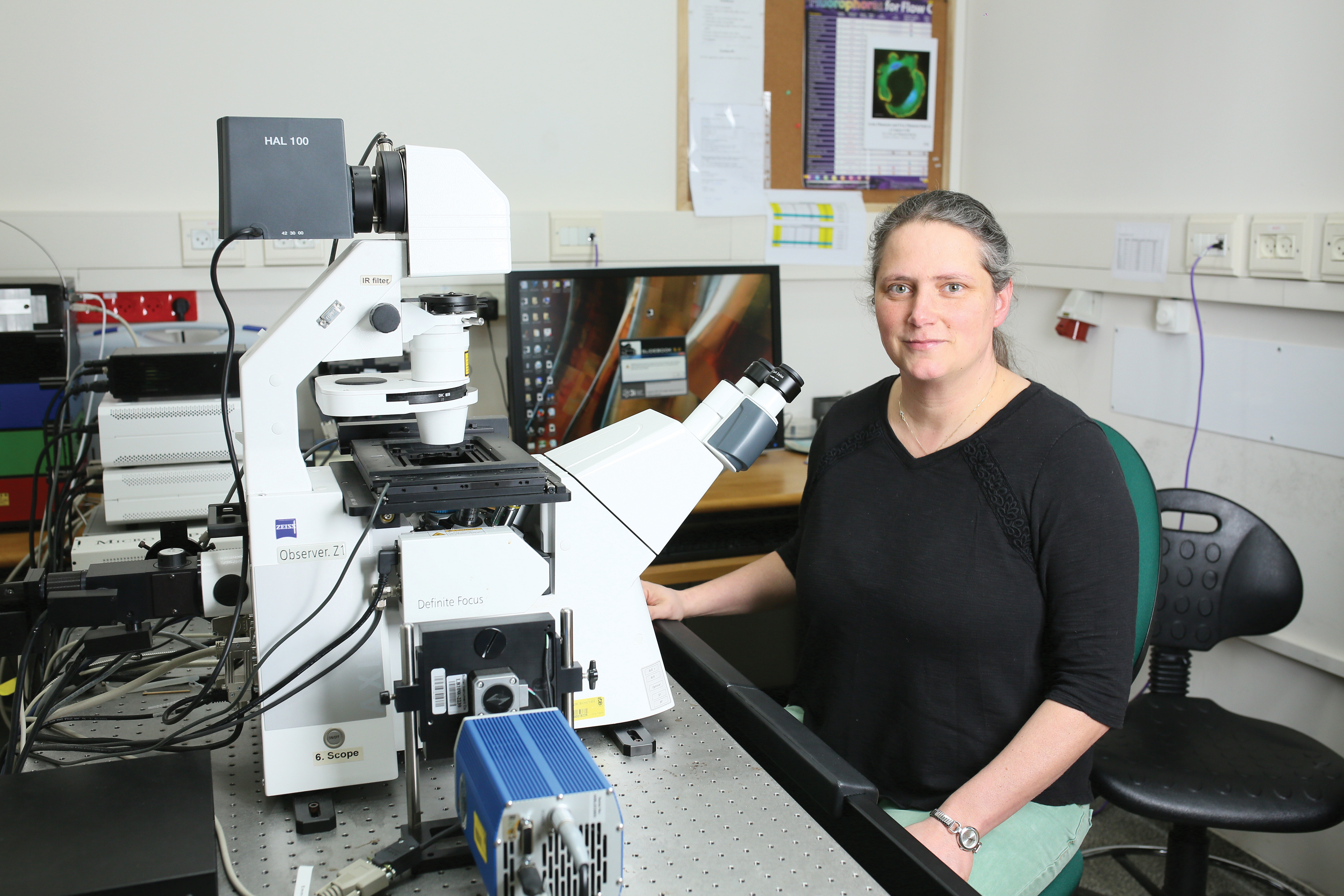
Prof. Kinneret Keren, Faculty of Physics
Template of Life
The hydra, from the jellyfish family, is less than half an inch long. Yet it has long intrigued scientists with its ability to regrow itself completely from decimated parts. Now, Prof. Kinneret Keren from the Faculty of Physics with colleague Prof. Erez Braun and students Anton Livshits, Lital Shani-Zerbib, and Yonit Maroudas-Sacks, have revealed the role of the cytoskeleton in this process. Publishing in Cell Reports, the research team described how hydras have a structural memory that helps shape their new body plan according to a pattern inherited by the animal’s skeleton. Until now, it was believed that only chemical signals informed the hydra’s reformation. Regenerating hydras use a network of tough, stringy protein fibers, called the cytoskeleton, to align their cells. When pieces are cut or torn from hydras, the cytoskeletal pattern survives and becomes part of the new animal. The pattern generates a small but potent amount of mechanical force that shows cells where to line up. This mechanical force can serve as a form of “memory” that stores information about the layout of animal bodies. “You have to think of it as part of the process of defining the pattern and not just an outcome”, says Keren. When pieces of hydra begin the regeneration process, the scraps of hydra fold into little balls, and the cytoskeleton has to find a balance between maintaining the old shape and adapting to new conditions. “If you take a strip or a square fragment and turn it into a sphere, the fibers have to change or stretch a lot to do that,” explains Keren. However, some portions retain their pattern. As the little hydra tissue ball stretches into a tube and grows a tentacle-ringed mouth, the new body parts follow the template set by the cytoskeleton in fragments from the original hydra. The cytoskeleton is like a system of taut wires that helps the hydra keep its shape and function. The main cytoskeletal structure in adult hydra is an array of aligned fibers that span the entire organism. Damage to this cytoskeleton will disrupt the formation of new hydras, the researchers found. In one experiment, the researchers cut the original hydra into rings which folded into balls that contained multiple domains of aligned fibers. Those ring-shaped pieces grew into two-headed hydras. However, anchoring the hydra rings to stiff wires resulted in healthy one-headed hydras, suggesting that mechanical feedbacks promote order in the developing animal. Hydras are much simpler than most of their cousins in the animal kingdom, but the basic pattern of aligned cytoskeletal fibers is common in many organs, including human muscles, heart, and guts, says Keren. Studying hydra regeneration may lead to a better understanding of how mechanics integrate with biochemical signals to shape tissues and organs in other species. “The actomyosin cytoskeleton is the main force generator across the animal kingdom,” says Keren. “This is universal.”

Superdrugs for Superbugs
Superdrugs for Superbugs
Does evolution depend on competition or collaboration? The discovery of antibiotics saved millions of lives, yet presently world health is in avicious spiral in which bacteria rapidly evolve to defeat available classes of antibiotics. Recruiting resources and knowhow from across the globe, Prof. Roy Kishony and colleagues are returning to the genius of nature to create superdrugs for superbugs. In a creative stroke inspired by the digital billboard for the Hollywood movie, Contagion, Kishony and his team at Technion and Harvard Medical School opened a global window to observe how bacteria evolve as they become impervious to drugs. Described in the September issue of Science, the large-scale experimental tool offered a first glimpse at bacteria adapting to increasingly higher doses of antibiotics, visible to the naked eye. A two-by-four foot petri dish was filled with 14 liters of agar, a seaweed-derived jelly-like substance commonly used in labs to nourish organisms as they grow. The dish was divided into sections saturated with incremental doses of antibiotics. Over the course of two weeks, a camera mounted on the ceiling above the dish took periodic snapshots. The result was a direct and detailed observation of bacterial movement, death and survival: evolution at work. The headline-grabbing Microbial Evolution and Growth Arena, was called the MEGA Plate for short. The video produced by the Kishony lab was viewed over 24 million times, likely making it the most viewed scientific experiment video of all times. According to Kishony, “Seeing bacteria spread for the first time was a thrill. Our MEGA-plate takes complex and often obscure concepts in evolution, such as mutations-selection, lineages, parallel evolution and clonal interference, and provides a visual seeing-is-believing demonstration. It is also a powerful illustration of how easy it is for bacteria to become resistant to antibiotics.” Co-investigators Michael Baym and Tami Lieberman said the images spark the curiosity of lay and professional viewers alike. Ultimately, in a dramatic demonstration of evolved drug resistance, bacteria spread to the highest drug concentration. In the span of 10 days, bacteria produced mutant strains capable of surviving a dose of the antibiotic trimethoprim 1,000 times higher than the one that killed their progenitors. When researchers used another antibiotic (ciprofloxacin) bacteria developed 100,000-fold resistance to the initial dose. Kishony’s lab is collaborating with Israel’s health services and with the Faculty of Computer Science to collate big data in order to develop “predictive genome-based” diagnostics capable of foreseeing bacterial evolution and provide the best treatment at the individual patient level. Roy Kishony is the Marilyn and Henry Taub Professor of Life Sciences and Head of the Lorry I. Lokey Interdisciplinary Center for Life Sciences and Engineering.
Rhythms of the Heart
BBiological pacemakers derived from stem cells could the cardiac revolution that makes electronic devices surgically inserted into the body a thing of the past. When the heart needs support keeping rhythm, the life-saving solution today is the surgical implantation of an electrical pacemaker. While conventional pacemakers have saved many lives, they have always carried surgical risks and come with no hormonal sensitivity and a predetermined battery life. With children’s hearts that are still growing, the pacemaker implant becomes still more limited in its ability to support, as the heart rapidly outgrows it. What could be more natural than to turn to the wisdom of the body itself, and its own biological mechanism for maintaining the heart rhythm?” The sinotrial (SA) node is the natural pacemaker of the heart, and is comprised of a group of dedicated heart cells – SA node pacemaker cells – responsible for initiation of the electrical signal leading to the heart’s rhythmic contraction. The team from the Technion, Rambam Health Care Campus, and the University Health Network’s McEwen Centre for Regenerative Medicine in Toronto, employed developmental biology to develop a differentiation protocol for the creation of pacemaker cells from human embryonic stem cells. “The pacemaker generated from embryonic stem cells exhibits the molecular, electrical and functional properties characteristic of human pacemaker cells and is able to pace the heart in animal models of abnormally slow heart rate,” said Prof. Gepstein. “It is an effective and promising alternative to natural pacemaker cells in the event of their dysfunction. This development is significant both in terms of research – because it will enable scientists to study the heart in new ways, and in practical terms – since we are presenting an ‘assembly line’ here for an unlimited reservoir of pacemaker cells to treat patients with heart rhythm problems. Together with our Canadian partners, we present a method for producing a population of pure pacemaker cells, and provide proof that they work well as a substitute for natural pacemaker cells that have been damaged.” Prof. Lior Gepstein holds the Sohnis Chair in Tissue Engineering and Regenerative Medicine.
Placebo Effect
Positive expectations can vastly enhance our body’s immune system, but why? And how can this placebo effect be leveraged to optimize healing? Unravelling the mysteries behind the Placebo Effect, researchers at the Rappaport Faculty of Medicine have shown how the brain’s ‘reward system’ transmits messages via the sympathetic nervous system that affect the efficiency of the immune system. Publishing in the journal Nature Medicine, Profs. Asya Rolls and Shai Shen-Orr and doctoral student Tamar Ben-Shaanan, used new methods to show that triggering the reward system in the brain stimulates the immune system, causing it to operate more effectively and eliminate bacteria faster. In addition, the immune system memory was shown to become more robust against bacteria, with advance warning the next time. “Placebo is a complex phenomenon in which the patient’s expectation of recovery affects his state of health,” explains Rolls. “Expectation of improvement and arousal of positive emotions are reflected in the activity of neurons in the brain. We decided to understand, at the molecular level, how areas of the brain associated with positive feelings affect the functioning of the immune system, which is basically the body’s main defense system. We have no doubt that this could lead to significant medical applications based on the effect of the brain on the body.” “Our breakthrough was made possible thanks to two new technologies,” explains Prof. Shen-Orr. “One is DREADD technology, which enables precise activation of specific neurons, and the second is CyTOF technology, which enables high resolution characterization of hundreds of thousands of cells in the immune system. By coupling these two technologies, we were able to demonstrate a causal connection between the activation of specific neural circuits in the brain and the increased activity of cell populations in the immune system. In the brain context, the researchers focused on the ventral tegmental area (VTA), a key component in the dopamine reward system. “This is the area of expectation for reward,” explains Rolls, “and it’s stimulated, for example, when someone offers us a bar of chocolate. We found that stimulation of this area activates the immune system’s anti-bacterial response, especially if it occurs before exposure to bacterial infection. The researchers also mapped the sympathetic nervous system, the route through which messages pass from the brain to the immune system. This is responsible for immediate reaction in emergency situations and stress.
Inquiry In-vivo
In a revolutionary approach to customize treatments for cancer, tiny quantities of “barcoded” drugs are tested inside the patient’s tumor to determine how well they work. Using synthetic DNA sequences as the tiniest of barcodes, Technion researchers have developed a new diagnostic technology for determining the suitability of specific anticancer drugs to a specific patient – before treatment even begins. Publishing in Nature Communications, the research team led by Prof. Avi Schroeder of the Wolfson Faculty of Chemical Engineering has created what could be described as a safe, miniature lab insidethe patient’s body, which examines the effectiveness of any drug on that individual patient. “The medical world is now moving towards personalized medicine, combining our barcoding technology with genetic screening ensures more accurately tailored cancer treatments that will determine which medicine is best for each patient,” explains Prof. Schroeder. Together with doctoral student Zvi Yaari, Schroeder packed miniscule quantities of anticancer drugs inside dedicated nanoparticles they developed. The unique design of the drug-loaded, nanoscale packages allows them to flow in the bloodstream to the tumor, where they are swallowed by the cancer cells. Synthetic DNA sequences attached to the anticancer drugs in advance serve as barcode readers of each drug’s activity in the cancer cells. After 48 hours, a biopsy is taken from the tumor, and the barcode analysis provides accurate information about cells destroyed by each drug. Together with the Technion Integrated Cancer Center, the researchers are currently working with drugs registered as anticancer drugs, but in principle, they can test a battery of drugs for each patient and find out which is the most effective to treat his or her disease. “It’s a bit like testing for allergies, where simple tests provide us with a specific person’s allergy profile. We developed a simple test that provides us with a profile of the cancer patient’s response to the designated anti-cancer drug. This method makes it possible to test the effectiveness of several medications concurrently inside the patient’s tumor. The minute doses are not felt by the patient, and do not pose any danger. Based on the test results, the most effective drug for the specific patient is selected.” The study is being funded by a prestigious Horizon 2020-ERC grant from the European Union and by the Israel Science Foundation and the Israel Cancer Association. The new technology was patented and discussions are underway for commercialization.

Selfie from Space
International Space University
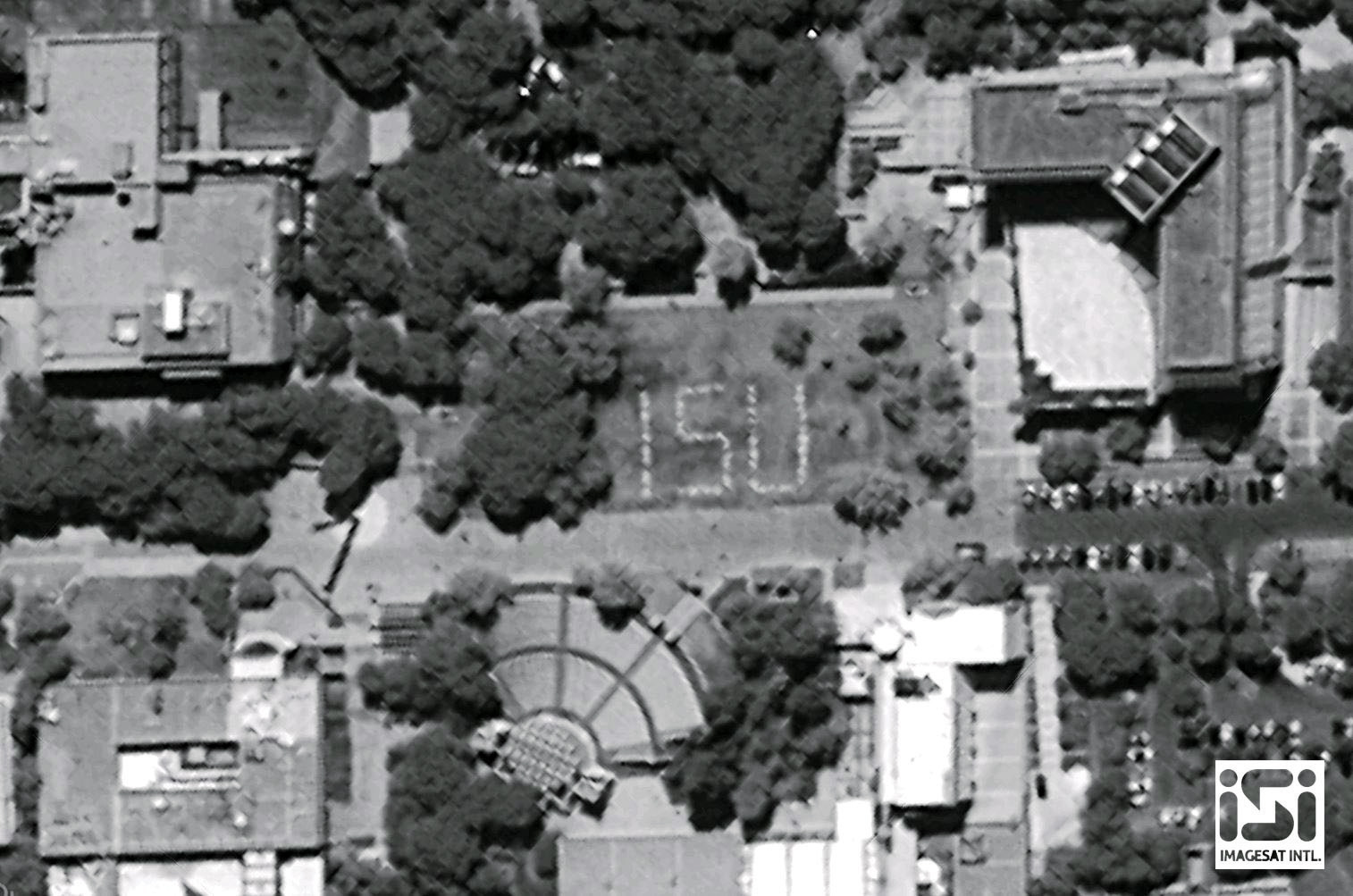
Summer 2016 and Technion City opened its eyes to the stars, hosting the International Space University (ISU), the first ever in the Middle East. Over 100 participants from 24 countries paraded their national flags, many wearing national costumes to initiate an academic festival of lectures, distinguished guests and space innovation. Technion hosted the 29 th annual Space Studies Program (SSP16) for an intense nine-week graduate level program which offers the participants a unique and comprehensive professional development experience covering all aspects of space programs and enterprises. Guests included US astronauts Buzz Aldrin (second man on the moon), Jeff Hoffman, and Jessica Meir; Rona Ramon, (widow of Israeli astronaut Ilan Ramon); Canadian astronomer David Levy, who discovered Comet Shoemaker-Levy 9; and aerospace engineer and science-fiction writer Eric Choi. Events included a robotics competition, a rocket launch at Kibbutz Gal’ed, and the first SpaceUp Unconference in the Middle East. The energy charged summer even included a ‘Selfie’ of SSP participants at the heart of Technion campus, taken by satellite. Earthlings formed the letters ISU on the great lawn at the heart of the campus for a selfie from space!

Analogous Sonic Black Hole
Analogous Sonic Black Hole
Black holes are massive collections of mass – with gravity so strong that nothing can escape, not even light. Stellar-mass black holes appear when massive stars explode. Supermassive black holes exist in the hearts of galaxies and usually contain the mass equivalent of millions of suns. Is a black hole the birth of a universe or the end of it? What happens when matter disappears at the event horizon? What is gravity? What is Hawking radiation? What can black holes tell us about the nature of quantum entanglement? In 1974, the Cambridge physicist Stephen Hawking theorized that black holes should create and emit sub-atomic particles, known today as Hawking radiation. Observation of this proposed phenomenon remained a “holy grail” for the fields of atomic physics, nonlinear optics, solid state physics, condensed matter superfluids, astrophysics, cosmology, and particle physics. Until last year, it remained just theoretical. But publishing in Nature Physics, Prof. Jeff Steinhauer presented first proofs that such radiation could exist. In his lab at the Faculty of Physics, Steinhauer has constructed a sonic black hole – an analogue of the real thing. “We observe a thermal distribution of Hawking radiation, stimulated by quantum vacuum fluctuations, emanating from an analogue black hole,” says Steinhauer. “This confirms Hawking’s prediction regarding black hole thermodynamics.” Pairs of entangled phonons (particles of sound) appear spontaneously in the void at the event horizon of the analogue black hole. One of the phonons travels away from the black hole as Hawking radiation, and the other partner phonon falls into the black hole. The pairs have a broad spectrum of energies. It is the correlation between these pairswhich allowed Steinhauer to detect the Hawking radiation. “We saw that such high energy pairs were entangled, while the low energy pairs were not. This entanglement verifies an important element in thediscussion of the information paradox as well as the firewall controversy,” explains Steinhauer. This observation of Hawking radiation, performed in a Bose-Einstein condensate, verifies Hawking’s semi-classical calculation, which is viewed as a milestone in the quest for the graviton – a fundamental particle of matter which should exist, but which hasn’t yet been found. Steinhauer has been working exclusively on the proof since 2009 in his hand-assembled lab at Technion, replete with lasers and dozens of mirrors, lenses, and magnetic coils to simulate a black hole. Motivated by an overriding curiosity regarding the laws of physics since he was a child, he says that evidence for the existence of quantum Hawking radiation brings us one step closer to uncovering the laws of our universe.
International Space University
Summer 2016 and Technion City opened its eyes to the stars, hosting the International Space University (ISU), the first ever in the Middle East. Over 100 participants from 24 countries paraded their national flags, many wearing national costumes to initiate an academic festival of lectures, distinguished guests and space innovation. Technion hosted the 29th annual Space Studies Program (SSP16) for an intense nine-week graduate level program which offers the participants a unique and comprehensive professional development experience covering all aspects of space programs and enterprises. Guests included US astronauts Buzz Aldrin (second man on the moon), Jeff Hoffman, and Jessica Meir; Rona Ramon, (widow of Israeli astronaut Ilan Ramon); Canadian astronomer David Levy, who discovered Comet Shoemaker-Levy 9; and aerospace engineer and science-fiction writer Eric Choi. Events included a robotics competition, a rocket launch at Kibbutz Gal’ed, and the first SpaceUp Unconference in the Middle East. The energy charged summer even included a ‘Selfie’ of SSP participants at the heart of Technion campus, taken by satellite. Earthlings formed the letters ISU on the great lawn at the heart of the campus for a selfie from space! “Today, I consider myself a global spokesman for space.” – Dr Buzz Aldrin, at Technion SSP

Entanglement Untangled
The Secrets of Entanglement Untangled
The tremendous power of quantum computing can only be unlocked through knowhow within the field of quantum entanglement. Called by Einstein ‘Spooky action at a distance’, entanglement is the means through which physical entities relate to each other irrespective of the distance between them. Entangled entities cannot be defined separately. For example, two particles can be arranged in an entangled state such that if particle A spins one way, particle B (even if it is vastly separated in time and space) will spin the other way.The global challenge has been how to make entanglement work to our advantage in the revolutionary field of quantum computing. Now, Prof. David Gershoni and doctoral students Ido Schwartz, Dan Cogan, and Prof. Netanel Lindner, have developed and demonstrated a novel way to generate clusters of entangled photons on demand. Their results were published in Science. “In effect, we demonstrated how to develop a device that “shoots” entangled photons on demand,” explains Prof. Gershoni. “This discovery is an important milestone bridging current classical technology and future quantum technologies.” The conceptual idea of a quantum knitting machine, or a quantum “machine gun” to ensure supply-on-demand of entangled photons was first suggested by Lindner (originally a student of Prof. Asher Peres) and Prof. Terry Rudolf of Imperial College, London in 2009. “Our demonstration presents a breakthrough in quantum technology… it may have revolutionary prospects for technological applications as well as to our fundamental understanding of quantum systems,” announces the paper’s abstract. The device at the core of their experiment is a “quantum dot,” several tens of nanometers in size, and comprised of a semiconductor embedded in another type of semiconductor. The researchers used various optical and electrical means to cause the emission of photons at specified times. Gershoni’s breakthrough is in effect the first device that emits many entangled photons on demand. For some, Quantum Computing could still seem the stuff of science fiction, but Prof. Gershoni takes the fiction out of science. “I believe that our discovery will advance the field of quantum information processing,” he says, “and that in the near future we will be able to see genuine applications of quantum technologies in broad use.” Quantum computers could quickly calculate way beyond the limits of today’s fastest supercomputers. Billions of dollars are being invested globally in the field of quantum information by corporations such as IBM, Apple, Google, NSA and various other government agencies. Prof. David Gershoni holds the Joseph and Bessie Feinberg Academic Chair.

The Einstein Connection
The Einstein Connection
Founder of the first Technion Society in 1923, Albert Einstein would remain an active Technion supporter throughout his life. Scientifically, Einstein’s Technion legacy continues until today. The 1946 publication in the Technion yearbook exemplifies his dedication to making sure the theory of relativity would be accessible to every student. “It is interesting to note that forty years after Einstein developed his theory and after his theory was universally recognized in the scientific community, he still thought it important to make it accessible to the educated intelligentsia,” comments Prof. Joseph Avron of the Technion Faculty of Physics. Founded in 1952, the Technion Department of Physics was led by Prof. Nathan Rosen, Einstein’s colleague. Rosen was one of the authors of the famous Einstein-Podolsky-Rosen (EPR) paper, questioning the very basics of Quantum Theory. Rosen was given a free hand in the recruitment of faculty members and among others, brought in another Einstein colleague, the world-renowned physicist Prof. David Bohm. A student of Rosen, Asher Peres, would become the beacon bearer of the Einstein legacy at Technion. Distinguished Prof. Peres is acclaimed for his work connecting quantum mechanics and information theory. Under his mentorship, generations of Technion physicists have emerged. David Bohm – Individuality is only possible if it unfolds from wholeness. Albert Einstein (Technion faculty, 1955-57)

Water-wave Laser
Water-wave Laser
With a device smaller than the width of a human hair, researchers will get greaterinsight into microscopic cells in order to understand and test different drug therapies. The water-wave laser is the brainchild of Prof. Tal Carmon, who is head of theOptomechanics Center at the Faculty of Mechanical Engineering. The innovation came when Prof. Carmon connected two areas of research that had been previously considered unrelated: nonlinear optics and water waves. The possibility of creating a laser through the interaction of light with water waves had not been previously examined due to the huge difference in frequency between waves of water and waves of light. A typical laser can be created by electron oscillations in atoms, causing them to emit radiation in the form of laser light. Prof. Carmon and team have now shown that waterwave oscillations within a liquid device can also generate laser radiation. An optical fiber delivers light into a tiny droplet of oil submerged in water. Light waves and water waves pass through each other, inside this droplet, approximately one million times, generating the energy that leaves the droplet as the emission of a waterwave laser. The interaction between fiber optic light and the miniscule vibrations on the surface of the droplet are like an echo, where the interaction of sound waves and the surface they pass through can make a single scream audible several times. In order to increase this echo effect in their device, the researchers used highly transparent, runny liquids, to encourage light and droplet interactions. Published in Nature Photonics, the research opens new horizons for scientists studying theinteraction of light and liquid phase matter at a scale smaller than the width of a human hair. The team included students Shmuel Kaminski, Leopoldo Martin, and Shai Maayani. Carmon did his postdoctoral research at CalTech, and recently returned to his alma mater the Technion from the University of Michigan, Ann Arbor where he served as a tenured professor. Prof. Tal Carmon holds the Leona Chanin Career Development Chair.
TECHNION MEDAL
The Technion Medal is awarded in recognition of exceptional individuals who have made unstinting efforts to advance humanity; who have worked tirelessly to contribute to the welfare of the Jewish people and the State of Israel; and whose diligent and generous support has proved critical in advancing the Technion, thereby strengthening the industrial, scientific and economic infrastructure of Israel. First established in 1996, the Medal is the Technion’s highest honor representing the utmost level of recognition that the Technion can bestow.